HCN Channel
Hyperpolarization activated cyclic nucleotide gated channels
Hyperpolarization- and Cyclic Nucleotide-gated (HCN) channels are a family of six transmembrane domain, single pore-loop, hyperpolarization activated, non-selective cation channels. The HCN family consists of four members (HCN1-4). HCN channels represent the molecular correlates of I(h), a hyperpolarization-activated current best known for its role in controlling heart rate and in the regulation of neuronal resting membrane potential and excitability.
HCN channels are unique among vertebrate voltage-gated ion channels, in that they have a reverse voltage-dependence that leads to activation upon hyperpolarization. HCN channels are encoded by four genes (HCN1-4) and are widely expressed throughout the heart and the central nervous system.
All Product Categories
-
HCN Channel Related Products (41)
Related Products (41)

-
ZD7288
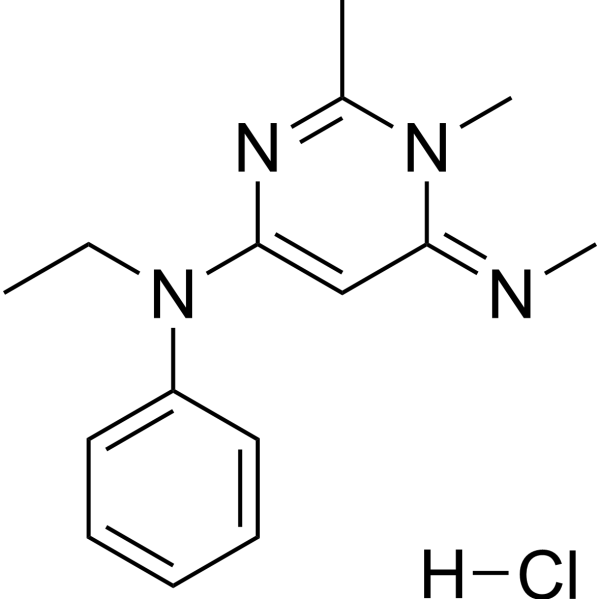 0 ImagesSynonyms: ICI D7288ZD7288 (ICI D7288) is a selective hyperpolarization-activated cyclic nucleotide-gated (HCN) channel blocker.
-
Ivabradine hydrochloride
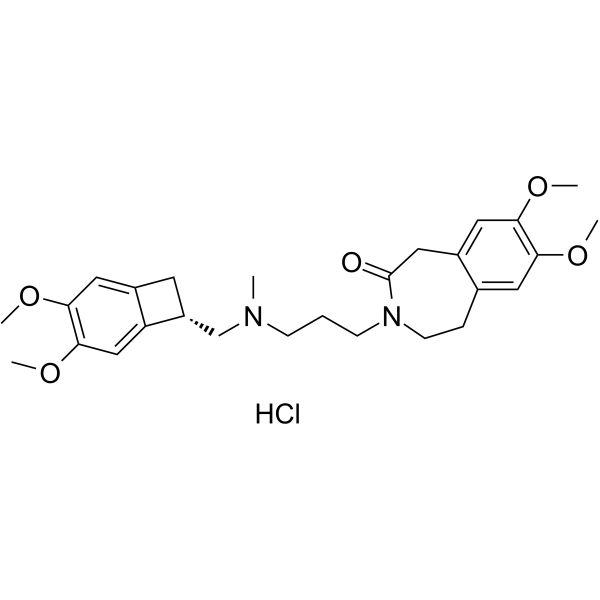 0 ImagesIvabradine hydrochloride is a potent and orally active HCN (hyperpolarization-activated cyclic nucleotide-gated) channel blocker that inhibits the cardiac pacemaker current (If). Ivabradine hydrochloride reduces dose-dependently heart rate without modification of blood pressure. Ivabradine hydrochloride shows anticonvulsant, anti-ischaemic and anti-anginal activity.
-
RO-275
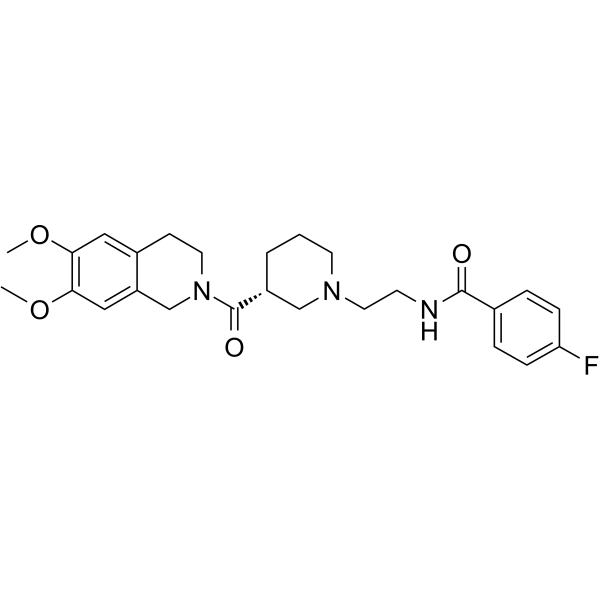
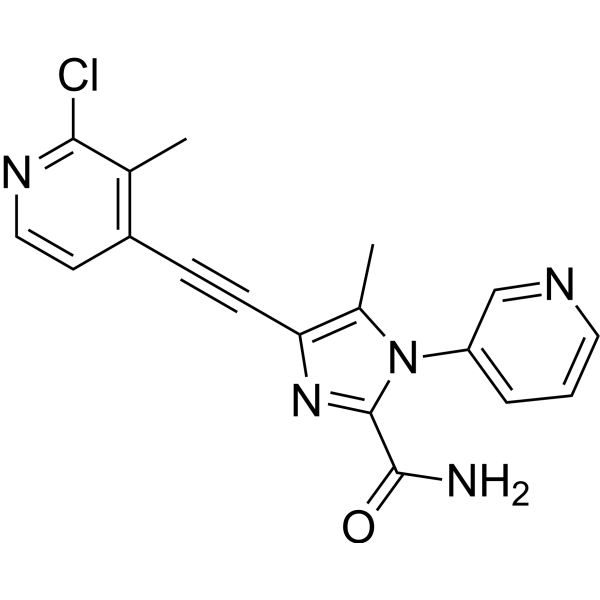 0 ImagesRO-275 (compound 29) is a potent, selective and orally active HCN1 inhibitor with IC50 values of 0.046, 14.3, 4.6, 13.9 µM for HCN1, HCN2, HCN3, HCN4, respectively. RO-275 rescues decremented working memory. RO-275 has the potential for the research of cognitive dysfunction in brain disorder.
-
Cilobradine hydrochloride
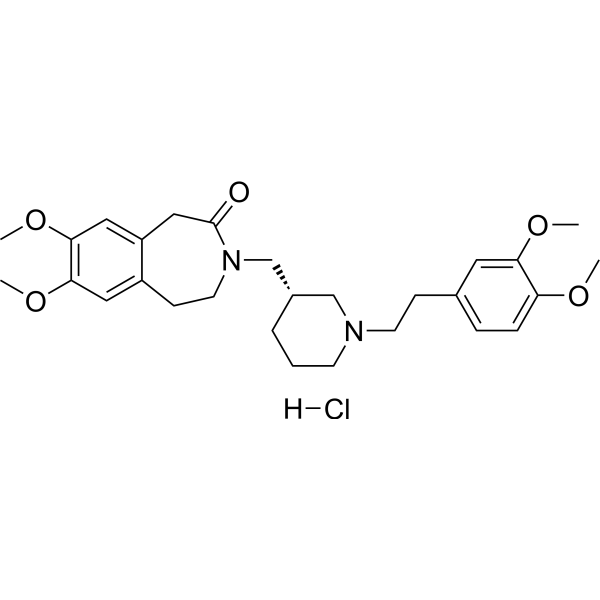 0 ImagesSynonyms: DK-AH 269Cilobradine hydrochloride is a HCN channel blocker. Cilobradine hydrochloride induces cardiac pacemaker currents and produces antidepressant effects.
-
Ivabradine
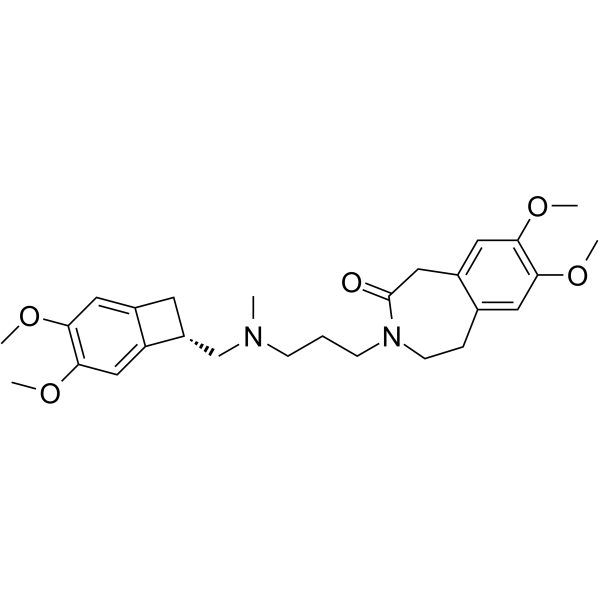 0 ImagesIvabradine is a potent and orally active HCN (hyperpolarization-activated cyclic nucleotide-gated) channel blocker that inhibits the cardiac pacemaker current (If). Ivabradine reduces dose-dependently heart rate without modification of blood pressure. Ivabradine shows anticonvulsant, anti-ischaemic and anti-anginal activity.
-
HCN2-IN-3
 0 ImagesCat. No.: HY-186056CAS No.: 3080808-83-6HCN2-IN-3 is an orally active HCN2 inhibitor. HCN2-IN-3 inhibits the activity of HCN2 ion channels. HCN2-IN-3 is applicable to research related to pain, tinnitus, central nervous system diseases, mental illnesses and mood disorders.
-
HCN2-IN-6
 0 ImagesCat. No.: HY-186058CAS No.: 3080808-95-0HCN2-IN-6 is a HCN2 ion channel inhibitor with an IC50 of 7 nM. HCN2-IN-6 shows weak inhibitory activity for HCN4. HCN2-IN-6 can be used for the research of inflammatory disease and neurological disorders.
-
Org 34167 (freebase)
 0 ImagesCat. No.: HY-182459CAS No.: 198968-25-1Org 34167 freebase is a blood-brain barrier permeable HCN channel modulator. Org 34167 freebase possesses high Caco-2 cell permeability. Org 34167 freebase modulates HCN channel function to alter activation properties and suppress neuronal hyperexcitability. Org 34167 freebase induces tremors in mice at specific doses. Org 34167 freebase acts as a research tool for studies on developmental and epileptic encephalopathies as well as depression.
-
Zatebradine
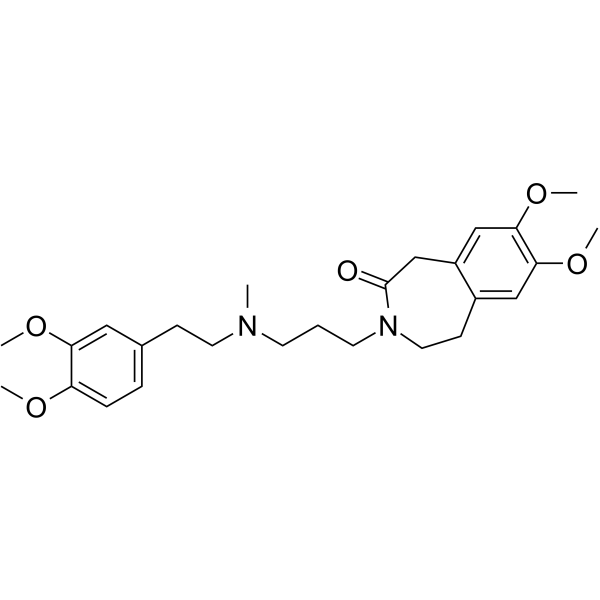 0 ImagesSynonyms: UL-FS-49 free base; UL-FS-49CL free baseZatebradine (UL-FS-49 (free base); UL-FS-49CL (free base)) is a potent inhibitor of hyperpolarization-activated cyclic nucleotide-gated (HCN) channels with an IC50 value of 1.96 µM. Zatebradine blocks the slow inward current through human HCN1, HCN2, HCN3 and HCN4 channels, with IC50 values of 1.83 µM, 2.21 µM, 1.90 µM and 1.88 µM, respectively.
-
Zatebradine hydrochloride
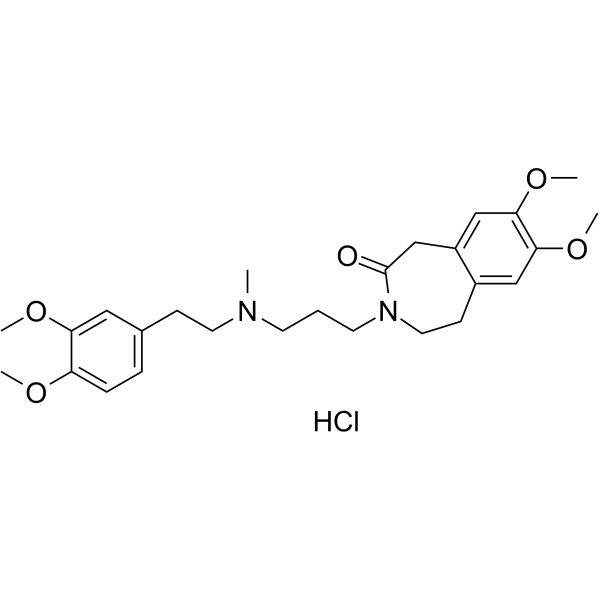 0 ImagesSynonyms: UL-FS-49; UL-FS-49CLZatebradine (UL-FS-49 (free base)) is a potent inhibitor of hyperpolarization-activated cyclic nucleotide-gated (HCN) channels with an IC50 values 1.96 µM. Zatebradine blocks the slow inward current through human HCN1, HCN2, HCN3 and HCN4 channels, with IC50 values of 1.83 µM, 2.21 µM, 1.90 µM and 1.88 µM, respectively.
-
Norquetiapine
 0 ImagesSynonyms: N-DesalkylquetiapineNorquetiapine ( N-Desalkylauetiapine), a metabolite of Quetiapine (HY-14544), is a selective HCN1 channel inhibitor, with an IC50 of 13.9 μM. Norquetiapine selectively inhibits noradrenaline reuptake, is a partial 5-HT1A (Ki = 45 nM) receptor agonist, and acts as an antagonist at presynapticα2 (Ki = 237 nM), 5-HT2C(Ki = 107 nM), and 5-HT7 (Ki = 76 nM) receptors. Norquetiapine blocks the human cardiac sodium channel Nav1.5 in a state-dependent manner. Norquetiapine shows partial anti-inflammatory effects in LPS (HY-D1056) injected C57BL/6 mice. Norquetiapine can be used for the study of depression and inflammation.
-
8-Pcpt-cGMP sodium
 0 Images8-Pcpt-cGMP sodium is the sodium salt form of 8-Pcpt-cGMP (HY-137016). 8-Pcpt-cGMP sodium is an agonist for cyclic nucleotide-gated (CNG) channel with an EC50 of 0.5 μM. 8-Pcpt-cGMP sodium exhibits good membrane permeability. 8-Pcpt-cGMP sodium can be used in studies about the function of CNG channels in visual signal transduction and olfactory transduction.
-
pan-HCN-IN-1
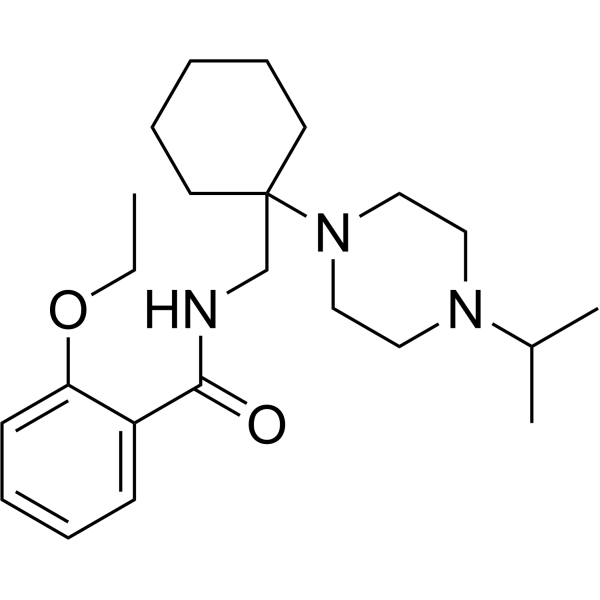 0 Imagespan-HCN-IN-1 is a potent HCN ion channel inhibitor with IC50 values of 58 nM, 522 nM, 58 nM, and 58 nM against HCN1, HCN2, HCN3, and HCN4, respectively. pan-HCN-IN-1 exerts voltage-dependent but not use-dependent inhibition, potently inhibits channels in the closed state, and significantly slows the activation time constant of HCN1 currents. pan-HCN-IN-1 can be used for the research of cognitive dysfunction.
-
MS7710
 0 ImagesMS7710 is a hyperpolarization-activated cyclic nucleotide-gated (HCN) channel inhibitor with blood-brain barrier permeability and an excellent brain/plasma concentration ratio. MS7710 inhibits HCN channel-mediated Ih current, and reduces the firing frequency and burst activity of dopaminergic neurons in the ventral tegmental area. MS7710 ameliorates chronic social defeat stress-induced deficits in social interaction and impairments in reward-related cognitive flexibility in mice. MS7710 exerts only limited effects on ventral tegmental area dopaminergic neuron activity, social interaction, exploratory behavior, locomotor activity or sucrose preference in control mice. MS7710 is applicable to the research of major depressive disorder.
-
CP 339818 hydrochloride
 0 ImagesCP 339818 hydrochloride is a non-peptide Kv1.3 channel (IC50 = 200 nM) and Kv1.4 channel blocker. CP 339818 hydrochloride inhibits HCN channel with IC50s of 18.9 μM and 43.4 μM against HCN1 and HCN4 (high Cl-). CP 339818 hydrochloride has significantly weaker blocking effects on Kv1.1, Kv1.2, Kv1.5, Kv1.6, Kv3.1-4, and Kv4.2 channels. CP 339818 hydrochloride selectively blocked Kv1.3, thereby inhibiting the activation process of human T cells. CP 339818 hydrochloride can be used to study the physiological functions of HCN and Kv channels.
-
VUANT1
 0 ImagesSynonyms: VU0183254VUANT1 (VU0183254) is an allosteric antagonist of insect odorant receptor ion channels, which has the activity of inhibiting insect odorant receptor signaling. VUANT1 can inhibit the activation of insect odorant receptors through allosteric regulation, which is important for the study of the molecular mechanism of insect olfactory signaling. Although it may be of limited use in insect control programs, it can be used as a pharmacological tool to study related mechanisms.
-
BPU-11
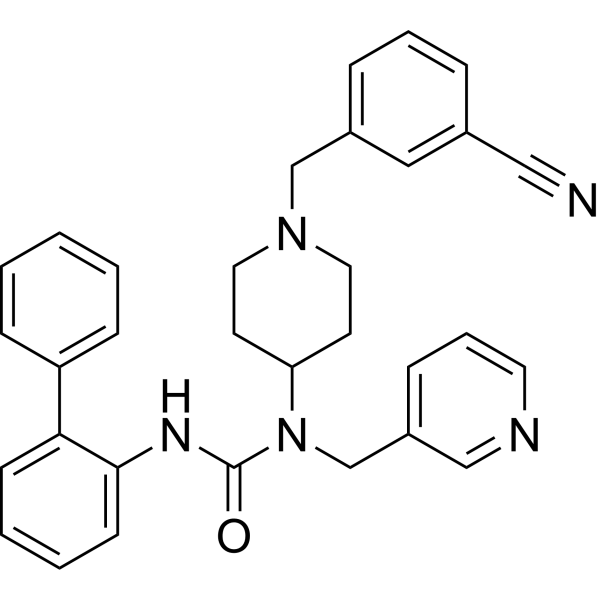 0 ImagesBPU-11 is a hyperpolarization-activated cyclic nucleotide-gated (HCN) C-linker pocket (CLP) HCN4 CLP ligand. BPU-11 can be used for the research of congenital immune disease.
-
Ivabradine-d6 hydrochloride
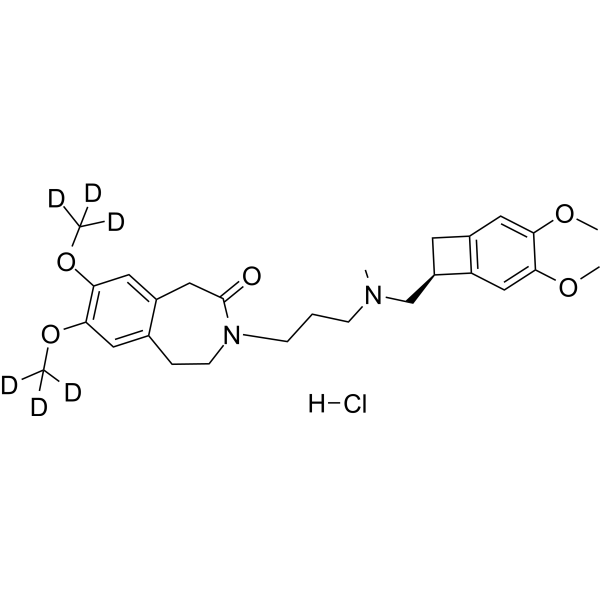 0 ImagesCat. No.: HY-B0162ASCAS No.: 2070009-63-9Ivabradine-d6 hydrochloride is the deuterium labeled Ivabradine hydrochloride. Ivabradine hydrochloride is a new If inhibitor with IC50 of 2.9 μM, and used as a pure heart rate lowering agent.
-
KIO-301 chloride hydrochloride
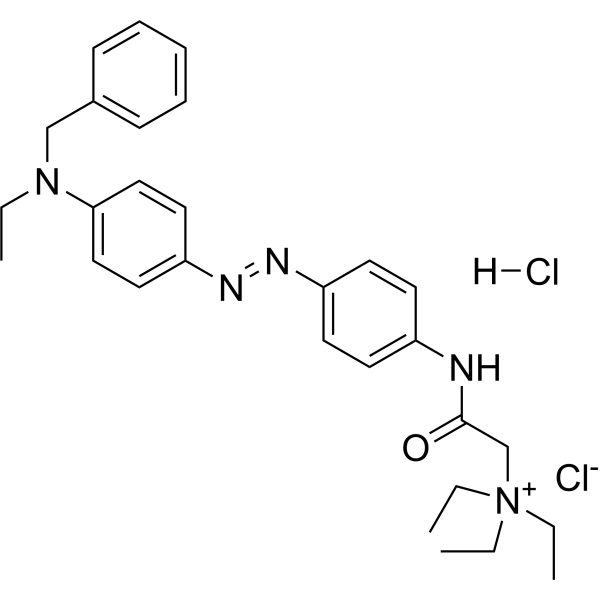 0 ImagesCat. No.: HY-161092APurity: 99.61%KIO-301 chloride hydrochloride is an azobenzene photoswitchable compound that blocks voltage-gated ion channels, including hyperpolarization-activated cyclic nucleotide gating (HCN, during exposure to visible light) ) and voltage-gated potassium channels (voltage-gated potassium channels).